
Crypto Banner Ads That Convert: Sizes, Creatives and Bids
Crypto banner ads that convert: which IAB sizes to build, how to design creatives for crypto sites, and how to set CPM or CPC bids that keep costs sane.
17 Nov 2026 · Advertisers
Crypto banner ads convert when three things line up: the right sizes for where crypto readers actually look, a creative that says one thing clearly, and a bid that buys enough volume to learn from. Most underperforming campaigns get one of these wrong, usually by uploading a single size, cramming the whitepaper into a 300×250, or bidding so low that the campaign never leaves the starting line.
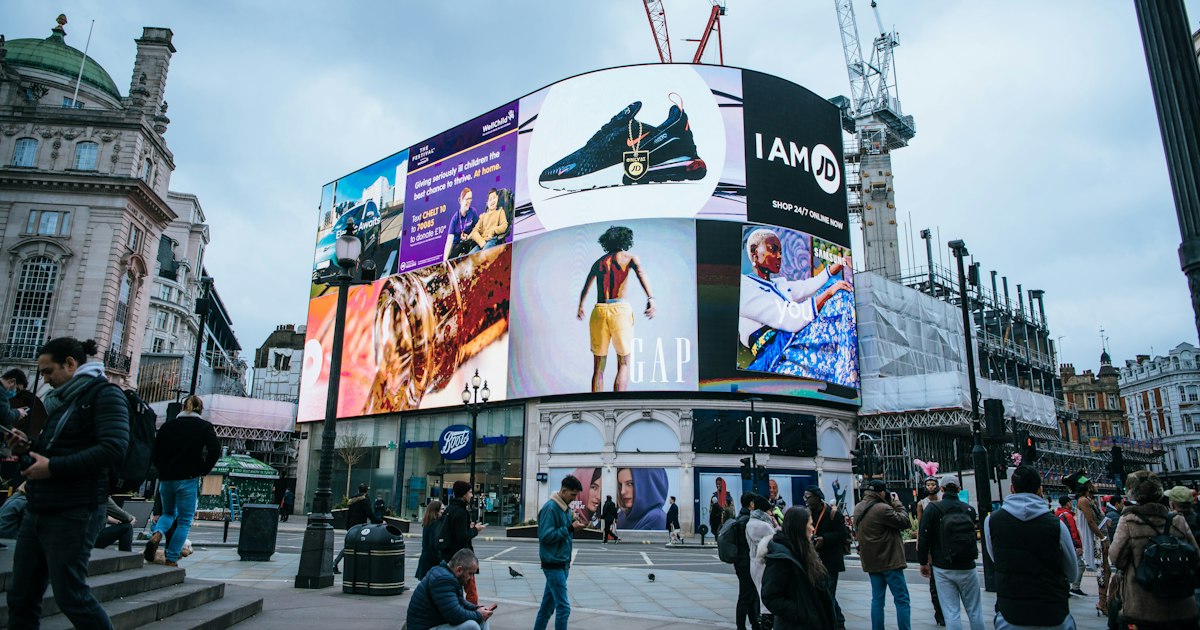
Photo: Tânia Mousinho on Unsplash
Below is a practical checklist for each part, written for teams running display on crypto-native sites.
Which banner sizes to build
Crypto publishers use a mix of desktop layouts (news portals, DeFi dashboards, explorers) and mobile pages (wallet guides, faucets, Telegram-linked landing pages). If you only supply one size, you only compete for the slots that size fits.
These are the standard IAB display sizes most crypto networks accept:
| Size | Name | Where it usually appears | Notes |
|---|---|---|---|
| 728×90 | Leaderboard | Top of article, under header | High visibility on desktop, little room for text |
| 300×250 | Medium rectangle | In-article, sidebar | The workhorse; most inventory supports it |
| 970×250 | Billboard | Above the fold on wide layouts | Great for launches, fewer slots available |
| 300×600 | Half page | Sticky sidebar | Room for a mini story: logo, offer, proof, CTA |
| 160×600 | Wide skyscraper | Narrow sidebars | Older layouts, still common on crypto sites |
| 320×50 | Mobile banner | Mobile header or footer | Very limited space: logo plus a few words |
| 480×320 | Mobile interstitial-style | Mobile in-content | Good for app or wallet installs |
| 800×400 | Large rectangle | In-content, wide layouts | Space for a product screenshot |
Rule of thumb: build at least 300×250, 728×90 and 320×50 before you launch. Those three cover most desktop and mobile slots. Add 300×600 and 970×250 when you want premium positions, and the rest to pick up remaining inventory.
Some networks use adaptive zones, where the publisher places one slot and the ad server chooses the best-fitting size per request. In that setup, a full size set directly increases how often your campaign is eligible to serve.
How to design crypto banners that get clicked
Crypto readers see a lot of banners, many of them low quality. A clean, credible creative stands out more than a loud one.
One message per banner
Pick the single strongest reason to click: lower fees, a new chain, a staking feature, an airdrop with clear rules, a launch date. Put that in six to eight words. Everything else belongs on the landing page.
Make the brand visible in the first frame
On animated banners, many viewers never see the last frame. Show your logo and the core message at the start, not after three seconds of animation.
Use a clear call to action
“Launch app”, “Get the wallet”, “Join the waitlist”, “Read the docs”. A button-shaped CTA with good contrast does better than a text link. Avoid vague verbs like “Discover”.
Design for the page around it
Crypto news sites are busy: price tickers, charts, red and green numbers. Banners that copy that look blend in. A calmer background with one accent color tends to stand out. Check how your banner looks on both light and dark site themes.
Keep claims honest
Networks with human review will reject guaranteed returns (“10x in a week”), fake partnerships and misleading urgency. Even if an ad slips through, those claims attract the wrong users and invite regulatory trouble. Specific, verifiable facts (a fee level, a supported chain, a launch date) build more trust.
Static or HTML5?
| Format | Pros | Cons |
|---|---|---|
| Static (PNG/JPG) | Light, fast, works everywhere, easy to iterate | No motion to catch the eye |
| Animated GIF | Simple motion, wide support | Larger files, limited colors |
| HTML5 | Smooth animation, sharp text, small file size if built well | More work to produce, needs testing per size |
A good approach is to run one static and one animated version of the same message, then keep the winner.
Producing a full set without a designer
Building eight sizes by hand, then a second variant for testing, adds up quickly. Some networks now include creative tools. Affizy’s Studio, for example, generates a full animated HTML5 set in every supported IAB size from one brief, with a style you pick. Whatever tool you use, review every size: text that fits a 300×600 often breaks in a 320×50.
Choosing between CPM and CPC
Most crypto display networks let you bid in one of two ways.
- CPM (cost per thousand impressions): you pay for exposure. Better for launches, brand awareness and retargeting-like coverage of a niche. You carry the risk of low click-through.
- CPC (cost per click): you pay only when someone clicks. Better for performance campaigns where you have a clear landing page and conversion goal. The network carries more of the risk, so it may serve your ads less often if your CTR is weak.
A quick way to compare them
Effective CPC on a CPM campaign is your CPM divided by (CTR × 1,000). If you bid $0.50 CPM and get a 0.2% CTR, you get 2 clicks per thousand impressions, so each click costs $0.25. If your CTR doubles, the effective CPC halves.
That is why creative quality matters even on CPM: better banners make every impression cheaper per result.
Setting a starting bid
- Look at the network’s published averages if it shares them, then bid around or slightly above to get delivery.
- If you bid too low, the campaign won’t spend and you won’t learn anything. A test that delivers at a slightly higher price beats one that never runs.
- On CPC, set a cap you would be happy to pay for a visit, based on your conversion rate. If 5% of visitors sign up and a signup is worth $5 to you, a visit is worth up to $0.25.
On Affizy, the advertiser sets the bid. CPM campaigns start from a few cents per thousand impressions, and CPC bids are capped at $0.25. At the time of writing (November 2026), the network-wide CTR sits around 0.2%; current figures are on the live network stats page.
Targeting and structure
Separate ad sets by goal
A clean structure makes results readable. A common pattern is Campaign → Ad set → Ads:
- Campaign: one product or launch, with one budget.
- Ad set: one targeting choice and one bid type (for example, CPM on news sites, CPC on DeFi tools).
- Ads: the banners, ideally two messages × all sizes.
Target by category
Crypto inventory is not uniform. News readers behave differently from faucet users or exchange visitors. Start with categories that match your product (DeFi tools for a protocol, wallet and exchange sites for a trading app) and expand once you have data.
Decide on incentivized traffic
Faucets and reward sites deliver cheap volume, but users there are often motivated by the reward, not your product. Some networks sell this traffic as a separate tier with its own pricing. Run it in its own ad set or exclude it, so it doesn’t distort your main numbers.
Measuring what matters
Clicks are a means, not the goal. Before launching:
- Install a conversion pixel or set up server-to-server postbacks for the action you care about: signup, wallet connect, first deposit.
- Use separate creatives per message so you can see which idea converts, not just which one gets clicks.
- Check stats per banner and size. A 300×250 might drive most clicks while a 970×250 drives the best signups.
- Pause losers weekly. Move budget to the size and message with the lowest cost per conversion.
- Refresh creatives every two to four weeks. Crypto audiences are small, so fatigue sets in faster than on mainstream platforms.
A launch checklist
- Full size set (at least 300×250, 728×90, 320×50), two messages each
- Logo and message visible in the first frame
- One clear CTA, honest claims
- Landing page that matches the banner’s promise
- Conversion pixel or postback live and tested
- Separate ad sets for CPM and CPC, or for incentivized and standard traffic
- A test budget large enough to get a few thousand impressions per creative
If you’re planning where to run these banners, start with our overview of crypto ads in 2026. If you’d rather have the banners and campaign set up for you alongside a sponsored article, see the Launch Pack walkthrough. To set up a self-serve campaign, the Affizy page for crypto advertisers has the details, or you can get started here.
FAQ
What is the best size for crypto banner ads?
300×250 is the most widely supported size, followed by 728×90 for desktop and 320×50 for mobile. Supplying a full set of IAB sizes lets your campaign compete for more slots.
Should crypto banners be animated?
Not necessarily. Animated HTML5 can catch attention, but the message must be visible in the first frame. Test a static and an animated version of the same message and keep the one that converts better.
Is CPM or CPC better for crypto banner ads?
CPM suits launches and awareness; CPC suits performance campaigns with a clear conversion goal. Compare them by effective cost per conversion, not by the bid alone.
What CTR should I expect on crypto banners?
It depends on the creative, the placement and the audience. Use the network’s published averages as a reference and judge your campaign on cost per signup or deposit rather than CTR alone.
How often should I change crypto banner creatives?
Every two to four weeks for most campaigns, or sooner if CTR drops steadily. Crypto audiences are smaller than mainstream ones, so the same readers see your banners more often.